Top Guidelines Of Radiator Covers
Table of ContentsThe Radiator Covers DiariesGetting The Radiator Covers To WorkThe Radiator Covers Statements3 Easy Facts About Radiator Covers DescribedGetting My Radiator Covers To WorkRadiator Covers Things To Know Before You Get This
Over at the Old House Web, Amy Hayden composed regarding Five Advantages to Using Radiator Covers. This has begun a little a debate: Are rad covers valuable or do they squander power? Hayden wrote, "Radiators are an excellent source of warm, but they likewise occupy important square video footage ...They may be called radiators, however they need to most likely be called convectors, given that the bulk of the warm that we obtain from a standard rad is relocated by convection. In convection, air heated in between the fins of the radiator climbs to the ceiling and is intimidated the space in a circle.
The Best Strategy To Use For Radiator Covers
Hayden wrote, "Radiator covers with the proper support can disperse heat extra efficiently than an uncovered radiator. As opposed to the warm going directly to the ceiling, the back allows it to be pushed into the living space." Lloyd Alter It is real that radiators ought to have an appropriate reflective backing; I utilize foil-faced bubble cover insulation; it shows a little of the radiated warmth that would certainly have been absorbed by the wall surface back right into the room and the radiator.
Radiator covers can be beneficial in older buildings developed after the influenza epidemic of 1918 - radiator covers. Then, as is the case now, health authorities thought that fresh air was the method to prevent getting conditions and that individuals need to rest with open home windows. Dan Holohan writes in "The Lost Art of Heavy Steam Home Heating" that in New York City, the Board of Health and wellness ordered that windows need to stay open at all times, and the radiators were designed to keep structures cozy on the coldest day of the year with the windows open
Unknown Facts About Radiator Covers
Some radiators, like copper finned contemporary rads, included indispensable covers, often with dampers to adjust the convection; they, like steam rads, need covers because they are also hot to touch. But for a typical cast iron rad that one locates in old houses, attached to a hydronic system, a cover isn't required for safety.
, Holohan noted that some radiators can obtain precariously hot. He described a lawsuit where a youngster rolled off the bed and obtained stuck between the radiator and the bed and suffered significant burns.
As a normal heating appliance, radiators are not there merely to look quite but to maintain your home warm using all-natural convection. Nevertheless, with more focus on interior layout, these home appliances can show unsightly and sidetrack from the remainder of the meticulously outlined aesthetic appeals of a room. To straighten a radiator to the design of the remainder of your room, you can cover one up though this does feature implications for the home heating.
A radiator cover is essentially a way of covering up a radiator to cover it from sight. They usually come in two products, wood and galvanised steel. Wood is thought about the most usual material for a radiator cover as it just looks far More about the author better. This is although that wood is not an excellent conductor of warm yet it is good for childproofing so is suitable for a young family.
Some Of Radiator Covers
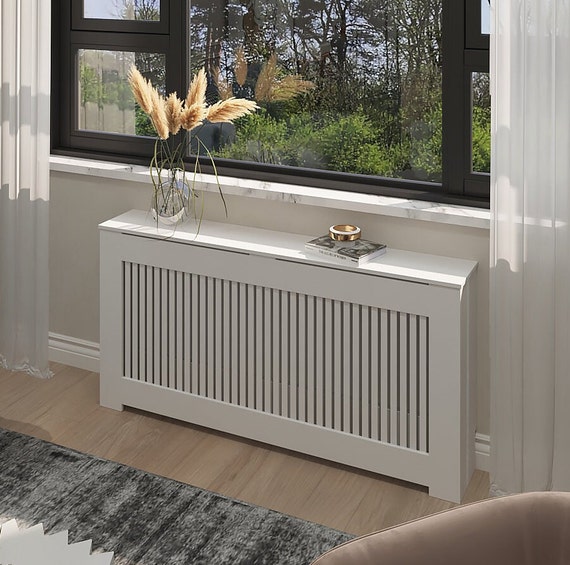
Not just can they childproof the appliance and include a visually pleasing design, but a radiator cover can likewise add added storage room, particularly in the shower room. With a level surface area, you should have the ability to store soaps and fragrances to maintain them within very easy reach. By repurposing the room, the radiator cover can end up being a makeshift mantelpiece.
That is certainly the instance with radiator covers and they can restrict the performance of your central heating system. By interrupting the circulation of warm air and the natural convection, you can suffer warmth loss and get to for the thermostat when you really need to not have to. Effectively, a radiator cover can cost you cash by excessively investing on home heating you are not taking pleasure in.
How Radiator Covers can Save You Time, Stress, and Money.
These include bleeding the radiators, applying reflective backing, and preserving a space for the radiator. A lot of houses need to be hemorrhaging their radiators at the very least yearly. The task helps to remove any trapped air which could be avoiding the hot water from navigating the appliance. It also only takes a min approximately to hemorrhage a radiator and is a fail-safe means to enhance its performance.
Radiators work by all-natural convection, as cool air Look At This sinks to the base of the wall, it enters contact with the radiator then warms up and climbs as the air ends up being less thick. The cozy air successfully heats up an area. If you were to put objects following to the radiator, such as a sofa, or border one with a radiator cover, after that this would conflict with the natural convection and you would certainly not be able to really feel the full advantages of the heating.
Radiator covers may be an excellent choice if you have kids running about and need a method of avoiding them from melting themselves on the warm surface. While a cover must look good to conceal a radiator, any type of product that obstructs a home heating home appliance will certainly decrease its effectiveness. go to my site To supply a complete layout, the radiator cover ought to look at the valves, along with the heating unit and pipelines.
The Buzz on Radiator Covers
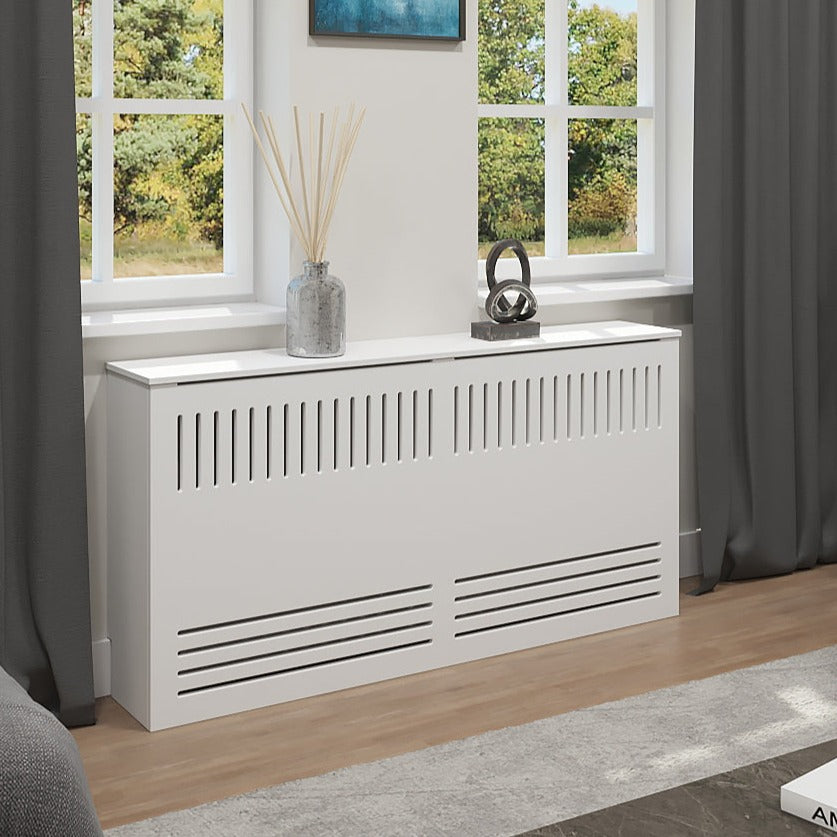
And thats my question: how do I go around identifying if my radiators should have covers? I have a close friend that believes the problem is easy: a cover traps the warmth, so getting rid of the cover will allow the warmth to much better enter the area and will certainly make the radiator much more efficient.
Which my concern: how do I tackle finding out if my radiators should have covers? I have a pal who thinks the problem is simple: a cover catches the warmth, so removing the cover will certainly allow the warm to better get in the space and will certainly make the radiator a lot more efficient.
Which my question: how do I set about identifying if my radiators should have covers? I have a good friend who thinks the issue is straightforward: a cover traps the warmth, so eliminating the cover will certainly allow the warmth to better get in the room and will certainly make the radiator more effective.